
The 2026 Beijing-Tianjin-Hebei Academic Conference on a Resilient Medical Emergency Network Around the Capital was held in Binhai New Area, Tianjin, on the afternoon of September 23. As part of the 2026 Beijing-Tianjin-Hebei health emergency cooperation program, the conference built on emergency drill outcomes and used academic exchange to strengthen collaboration among the three regions. It was jointly organized by the health commissions of Beijing, Tianjin, and Hebei. Beijing sent heads and representatives from nine organizations, including the Beijing Public Health Emergency Management Center, Beijing Emergency Medical Center, Beijing Center for Disease Prevention and Control, Beijing Red Cross Blood Center, China-Japan Friendship Hospital, Peking University Third Hospital, Beijing Hospital of Traditional Chinese Medicine, Beijing Anding Hospital, and the Rescue Service Center of the Beijing Red Cross Society.
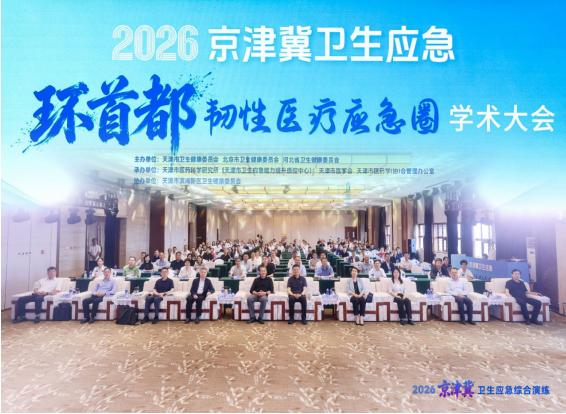
The conference theme was “Building a Resilient Medical Emergency Network Around the Capital and Enhancing Regional Emergency Coordination.” With a focus on the goal of developing a modern capital metropolitan area,participants aimed to move regional health emergency cooperation from occasional coordination toward institutionalized, long-term operation, while promoting the sharing of advanced technologies, proven experience, and innovative ideas. The conference provided a high-level platform for integrated health emergency cooperation across the three regions. Participants agreed that initial progress had been made on regional medical emergency coordination: regional coordination mechanisms were improving and emergency response capabilities were steadily increasing. The regions will deepen resource sharing, complement one another's strengths and improve a medical emergency system that serves both routine and emergency needs. With resilience-building as the overarching theme and coordination mechanisms as the key driver, the regions will work together to strengthen the defenses in safeguarding public health and safety.
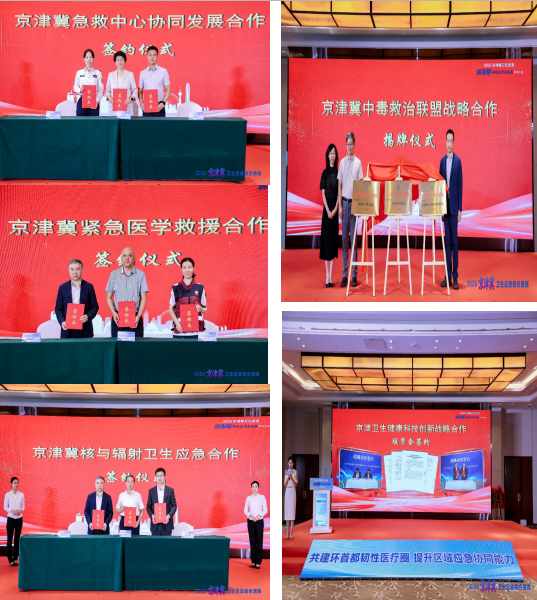
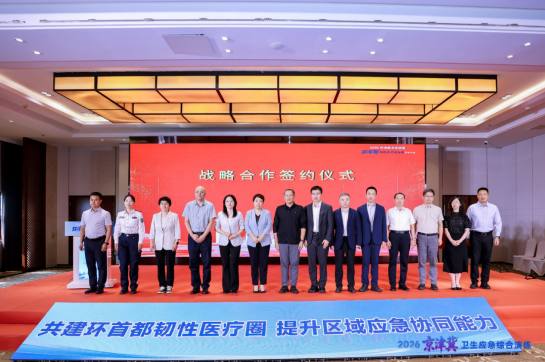
In the presence of delegates, the three regions signed five strategic cooperation agreements on medical emergency focusing on key areas of regional coordination, with clear priorities and practical, specific measures. In emergency medical rescue, they will establish new cooperation mechanisms for information sharing, joint use of resources, coordinated team training, joint treatment of casualties, and collaborative research. In pre-hospital emergency care, they will promote work pattern for coordinated operations, joint prevention and control, and integrated services. In nuclear and radiological health emergencies, they will establish a region-wide collaborative medical emergency response system covering Beijing, Tianjin and Hebei, and improve rescue capabilities fornuclearandradiological incidentsandpromotestandardizedmedicaltreatment across theregion.In poisoning treatment, they unveiled the Beijing-Tianjin-Hebei Poisoning Treatment Alliance to improve coordinated treatment of acute poisoning and reinforce the region's defenses against public health emergencies. In medical science and technology innovation, they will advance the integration of health services between Beijing and Tianjin and promote innovation in technology and industry in the health emergency field. The agreements will strengthen the resilient health emergency network around the capital and bolster regional public health resilience.
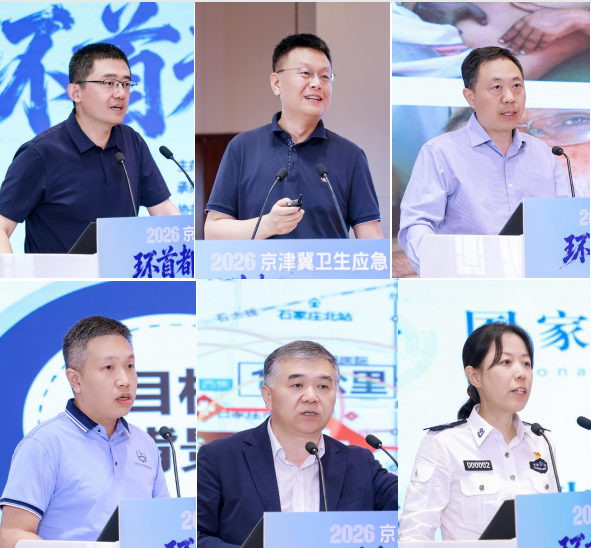
The keynote session provided multidimensional intellectual support for the development of a resilient medical emergency response network around the capital, drawing on theoretical foundations, policy guidance, and disciplinary expertise. Professor Wang Yongming of the Party School of the Central Committee of the Communist Party of China delivered a presentation on “Theory and Practice of Scenario Development for Major Emergencies,” offering theoretical guidance and practical insights for advancing the development of the network. Du Qingyang, Director of the Medical Emergency Response Department of the National Health Commission, drew on experience in developing the medical emergency response system and strengthening response capacity to explain the top-level design for these efforts under the 15th Five-Year Plan. His presentation offered valuable insights for Beijing, Tianjin, and Hebei in optimizing the distribution of emergency medical rescue bases and enhancing regional rescue capabilities. Professor Fan Haojun, Dean of the School of Health Emergency Response at Tianjin University, focused on “Advancing Emergency Rescue Capabilities through Emergency Medicine.” From the perspectives of discipline development and talent cultivation, he analyzed the key role of emergency medicine in improving emergency medical rescue capabilities, offering valuable insights for strengthening the development of health emergency disciplines and enhancing the professional competence of emergency response teams.
The thematic discussion session focused on cutting-edge practices in health emergency response, with in-depth exchanges on topics including the modular development of resilient medical emergency response capabilities around the capital, the integration of digital intelligence into prehospital emergency care, and the development of an integrated air-ground smart trauma emergency care system. Xu Chun, Head of the Emergency Guidance Division at the Beijing Public Health Emergency Management Center, delivered a presentation titled “Modular Integration of Routine and Emergency Response: Pathways for Developing Beijing’s Health Emergency Response Capabilities within the Resilient Medical Emergency Response Network around the Capital.” Hou Zhiyong, President of the Third Hospital of Hebei Medical University, shared the hospital’s explorations in “Integrated Routine and Emergency Response across Air and Ground: Developing a Smart, Full-Chain Trauma Emergency Care System.” Zhang Qing, Deputy Party Committee Secretary and Director of the Tianjin Emergency Medical Center, shared Tianjin’s experience in “How Digital Intelligence Can Drive High-Quality Development in Prehospital Emergency Medical Care in the New Era.” The discussions addressed emerging challenges to public health security while showcasing the latest achievements of the health commissions of Beijing, Tianjin, and Hebei in smart emergency care, coordinated dispatch, and full-chain medical treatment. In their concluding remarks, officials responsible for medical emergency response at the health commissions of Tianjin, Beijing, and Hebei stated that the three regions would continue to deepen multidimensional collaboration, focusing on integrated routine and emergency response, digital intelligence-enabled innovation, and capacity enhancement.
This academic conference built consensus and strengthened collective efforts, marking a shift in health emergency response collaboration among Beijing, Tianjin, and Hebei from jointly establishing mechanisms to jointly enhancing capabilities, and from sharing resources to integrating systems. Going forward, the three regions will improve emergency coordination mechanisms to facilitate more efficient and seamless information sharing, resource allocation, and team collaboration. They will strengthen the application of digital intelligence to advance digital and intelligent capabilities in prehospital emergency care, emergency dispatch, and the entire chain of medical treatment. They will also deepen collaboration in talent development, technical exchanges, and scientific research to continuously strengthen the development of emergency medicine as a discipline and enhance professional rescue capabilities across the region. In addition, they will promote scientific and technological innovation, facilitate the translation of research achievements into practical applications, and foster industrial collaboration to inject new momentum into regional health emergency response capacity building. Looking ahead, Beijing, Tianjin, and Hebei will work together to develop a higher-level resilient medical emergency response network around the capital, providing strong support for strengthening the regional public health security barrier, advancing the national strategy of coordinated development of the Beijing-Tianjin-Hebei region, and safeguarding the lives, health, and well-being of the people.