
To further deepen education on upholding and practicing a correct view of political performance, firmly establish the principle that "bringing benefits to the people is the greatest political achievement," and translate the outcomes of this educational initiative into concrete actions that safeguard public health and accelerate the development of Healthy Beijing, the Party Committee of the Beijing Municipal Health Commission held a special Party lecture on July 24. Zhong Dongbo, Secretary of the Party Committee, delivered the lecture under the theme "Guiding the High-Quality Development of the Capital's Health Sector with a Correct View of Political Performance." Liu Juncai, Director of the Commission, attended the event. Participants included members of the leadership teams of the "One Commission and Three Administrations," heads of the Commission's departments, representatives of retired Party members, and principal Party and administrative leaders from municipal hospitals and affiliated institutions.
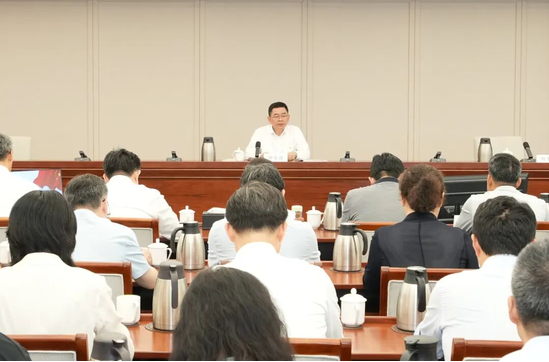
In his lecture, Zhong emphasized that President Xi Jinping has consistently attached great importance to the issue of political performance and has made a series of important statements on establishing and practicing a correct view of political performance. These remarks clearly explain for whom achievements should be made, what kind of achievements should be pursued, and how they should be accomplished, providing both strategic direction and fundamental guidance for carrying out the educational campaign. He noted that conducting this educational initiative is essential for implementing the strategic arrangements of the Fourth Plenary Session of the 20th CPC Central Committee, ensuring decisive progress toward the basic realization of socialist modernization, practicing the Party's fundamental purpose of serving the people, consolidating the Party's governing foundation, and advancing full and rigorous Party self-governance. Zhong called on Party members and officials throughout Beijing's health system to fully recognize the significance of the campaign, accurately grasp its overarching requirements of serving the public interest, improving people's well-being, making sound decisions, and taking concrete action, remain focused on high-quality development as the primary task, respond to the people's growing aspirations for a better life, fully, accurately and comprehensively implement the new development philosophy, and strengthen the foundation for development through the high-quality development of the health sector, and fully integrate the people-centered value of improving public well-being into concrete efforts to safeguard the health of the people.
Zhong further stressed that a correct view of political performance should be embedded in every aspect of the capital's health work. He called for faithfully implementing the principle of prevention first, strengthening the public health system, enhancing prevention at the source, improving the efficiency of resource investment, and continuously reducing the disease burden on the public. He also emphasized the need to embrace the concept of value-based healthcare, continuously improve the quality of medical services, and better meet the public's expectations for high-quality, affordable, convenient, and patient-centered healthcare. He urged adherence to the correct direction in medical research by promoting the coordinated realization of scientific, practical, and economic value, enabling research achievements to improve public well-being while supporting high-quality industrial development. In addition, Zhong highlighted the importance of improving medical education and talent development mechanisms, removing barriers created by the "Four Onlys", cultivating a highly qualified workforce suited to the development needs of Beijing's health sector, and enhancing administrative efficiency by shifting from a control-oriented approach to a service-oriented model that promotes a health governance framework featuring effective coordination across all levels and highly efficient interdepartmental collaboration.
Zhong further emphasized that Party members and officials across the city's health system should remain committed to their original mission, take responsibility with initiative, and strive to achieve results that can stand the test of practice, the people, and history. He called for strengthening ideological understanding by correctly balancing public and private interests, visible and long-term achievements, immediate and long-term goals, and local and overall interests, thereby laying a solid foundation for sound political performance. He also urged officials to strengthen Party spirit through continued study of the Party's innovative theories, serious participation in intra-Party political life, and practical experience. To improve governance capacity, Zhong identified five key competencies that should be strengthened: investigation and analysis, scientific decision-making, effective implementation, reform and innovation, and tackling difficult challenges. He also called for improving institutional mechanisms by addressing weaknesses in existing systems, standardizing decision-making procedures, closely supervising key minority officials, strengthening checks on the exercise of power, and clearly defining the boundaries of political performance. Furthermore, he stressed the importance of following the mass line by regularly consulting the public, soliciting opinions openly, consciously accepting public supervision, and refining governance through responsiveness to people's needs. He also called for improving the performance evaluation system, ensuring that assessments serve as an effective guide toward the correct orientation of political achievement, while strengthening Party leadership and political responsibility to provide strong organizational support for the high-quality development of Beijing's health sector.
In his lecture, Zhong stated that establishing and practicing a correct view of political performance is a long-term and significant political task, as well as a lifelong responsibility for every Party member and official. He urged all personnel in the health system to remain firmly committed to a people-centered approach, uphold the principles of putting the people first and putting life first, diligently deliver practical health initiatives that benefit the public, advance the development of Healthy Beijing, support the capital's efforts to take the lead in basically realizing socialist modernization, and write a new chapter in the high-quality development of Beijing's healthcare sector in the new era.