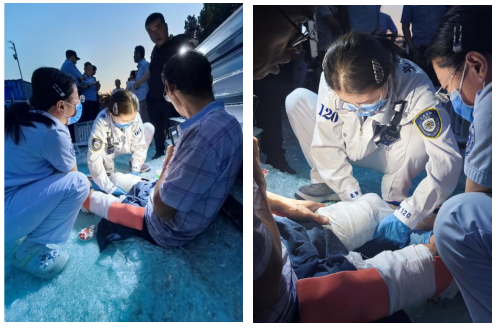
Recently, the Beijing Emergency Medical Center's Beijing Economic-Technological Development Area Emergency Station received an urgent call after an accident at a glass-processing plant. A stack of glass panels more than one meter high collapsed, striking a man and causing multiple injuries to both legs. His condition was urgent and he needed immediate assistance. The team—physician Wang Xinyu, nurse Yang Xuelian, and driver Wang Wei—rushed to the scene.
On arrival, emergency personnel brought resuscitation equipment to the injured man. Sharp glass fragments were scattered across the site, making it hazardous.A moment's inattention could result in cuts from the broken glass scattered across the floor.After confirming there was no risk of a further collapse, Wang Xinyu began emergency care immediately. She assessed the man's consciousness and vital signs and carefully examined his injuries. The examination revealed multiple cuts and lacerations with bleeding on both legs, as well as obvious swelling and deformity. Based on the circumstances, she suspected multiple fractures. The severe pain had left the man anxious and distressed.
Every second counted. Wang Xinyu carefully removed loose glass fragments from around the wounds and then controlled the bleeding and dressed the wounds. For suspected fractures, Yang Xuelian assisted the physician in applying external splints to the injured limbs. This helped reduce pain during handling and prevent displacement of the fractured bone ends, lowering the risk of secondary injuries, including damage to blood vessels and nerves. Throughout the rescue, the team followed standardized procedures while reassuring the injured man and easing his fear and anxiety. Driver Wang Wei maintained order, created a safe working area, and prepared for transport.
After completing on-site emergency procedures, the team worked together to transfer the injured man safely onto a stretcher and quickly take him to the nearest hospital. From assessing the scene and evaluating the injuries to controlling bleeding, immobilizing suspected fractures, and arranging safe transport, each step was coordinated and timely, buying valuable time for hospital treatment.
The rescue demonstrated the rapid response, professional skills, and standardized, efficient on-scene care of pre-hospital emergency teams. Emergency personnel will continue to hone their skills and strengthen the first line of lifesaving response, safeguarding the life and health of people in the communities they serve.
Beijing 120 reminds the public: if a collapse or crushing accident of this kind occurs, call 120 immediately and leave the response to professional emergency personnel. Acting promptly helps preserve the critical window for treatment and minimize the risk of further injury.